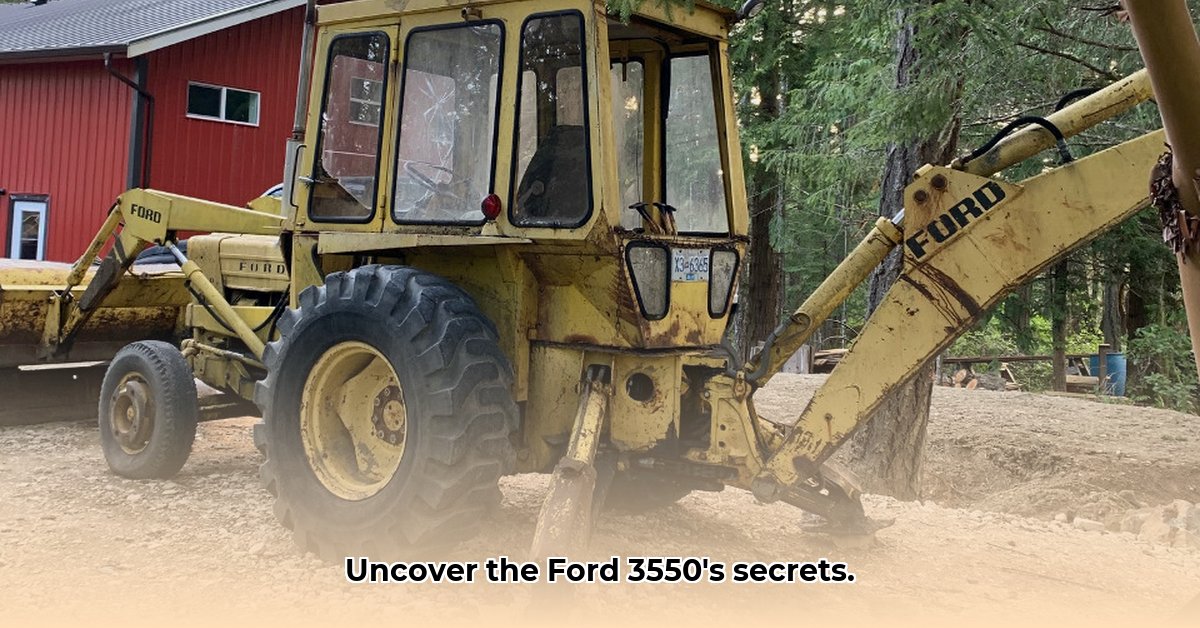
3550 Ford Tractor: A Deep Dive into Specs and History
The Ford 3550 tractor, produced between 1972 and 1975, represents a significant chapter in agricultural machinery. This article details its specifications, operational capabilities, and the challenges faced by modern owners. Understanding its historical context is crucial for appreciating its design and limitations. This robust machine, while lacking the amenities of modern tractors, offered considerable power and reliability for its time. The 3550's enduring appeal stems from its robust build and straightforward mechanics. For more on similar models, see the Ford 3600 specs.
Power Under the Hood: Engine and Performance
The Ford 3550 boasted a powerful, yet compact, 2.6-liter three-cylinder engine. This engine, available in both gasoline and diesel variants, generated approximately 50 horsepower—a considerable output for its era. While fuel efficiency wasn't a primary design focus, the engine's durability and consistent performance in demanding conditions contributed to the tractor's reputation for reliability. Were the variations in reported horsepower outputs due solely to differences in testing methodologies, or did other factors influence these discrepancies? The engine’s design prioritized longevity and consistent power delivery over fuel economy, a typical feature of agricultural machinery from that period.
Chassis and Construction: Built for the Long Haul
The 3550's design prioritized ruggedness and practicality. Its 81.1-inch wheelbase ensured stability, even under heavy loads. The open operator station, while lacking climate control, provided excellent visibility, a critical advantage for precise maneuvering. The dependable wet-disc braking system provided reliable stopping power, a crucial safety feature. The tractor's weight, approximately 4400 lbs, reflects its sturdy construction, built to withstand years of hard work. Given its open design, how effectively did the 3550 protect the operator from the elements and potential hazards? The open design prioritised visibility, a key advantage for farming operations.
Operational Capabilities and Practical Considerations
Precise data on PTO horsepower and drawbar pull for the Ford 3550 is inconsistent across various sources, largely due to the less-standardized testing methods of the time. This highlights variability in historical data collection. The tractor's classification as an "industrial tractor" suggests its versatility extended beyond typical farm applications. How did this versatility impact the 3550's overall market appeal? The classification reflected its adaptability to different tasks beyond conventional agriculture.
Customizable Options: Tailoring Your Tractor
Ford offered options to customize the 3550, including different rear tire sizes to accommodate varied soil conditions and applications. The availability of a roll-over protective structure (ROPS) as an option underscores the differing safety standards of the era. How significantly did the availability of optional features such as the ROPS influence the overall safety profile of the Ford 3550? The ROPS option represented a valuable, though not standard, safety improvement.
A Collector's Dream: Preserving History
The Ford 3550 has become a sought-after collector's item. However, sourcing original parts for restoration poses a significant challenge. The tractor's relatively simple mechanical design, however, makes restoration achievable for mechanically inclined individuals. What unique aspects of the 3550's design make it particularly appealing to restoration enthusiasts? The relative simplicity of its design makes restoration more manageable.
Comparison Table: 3550 Ford Tractor Specifications (Approximate Values)
| Specification | Value | Notes |
|---|---|---|
| Engine | 2.6L 3-cylinder | Gasoline or Diesel options available |
| Power Output (Net hp) | ~50 | Variations reported across sources |
| Wheelbase | 81.1 inches | |
| Weight | ~4400 lbs | Minor discrepancies in reported figures |
| Fuel Tank Capacity | 16 gallons | |
| Braking System | Wet-disc |
Challenges and Considerations for Modern Owners
Owning a vintage tractor like the 3550 presents unique challenges, including sourcing replacement parts. A strong understanding of mechanical systems is essential for maintenance and repairs. The lack of modern safety features, even when options such as ROPS were offered, requires careful consideration. What are the most significant challenges a modern restorer of a 3550 faces and how can these be mitigated? The lack of readily available parts and the absence of modern safety features present significant hurdles.
How to Restore a Ford 3550 Industrial Tractor
Restoring a Ford 3550 combines technical expertise with a historical perspective. A systematic approach is vital. This process involves meticulous assessment, parts sourcing, and careful reassembly. Technical manuals and online resources are invaluable tools. The restoration process requires patience and dedication, ultimately unveiling its historical significance. What are the most effective resources for sourcing and verifying high quality replacement parts for a 3550 restoration project? Online forums, salvage yards, and specialist suppliers are valuable resources for acquiring original or reproduction parts.
Key Takeaways:
- The Ford 3550 restoration requires a methodical and comprehensive approach.
- Sourcing parts necessitates patience and resourcefulness.
- Understanding the tractor's mechanical specifications is paramount for successful restoration.